> A new pair of giant pandas arrive at The National Zoo in Washington
A new pair of giant pandas arrive at The National Zoo in Washington
Clip ID 2289440
Clearance
Add to
Share
Add to Review Link
By Request
By Request assets are not available for immediate purchase.
This content has not been pre-checked for copyright.
Per clip rates are for 20 seconds of final usage. If you are using more then 20 seconds or need a different file format or have questions about clearances contact us
Description
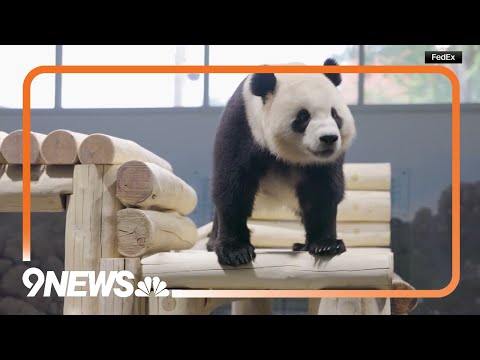
Eleven months after the zoo sent its three wildly popular pandas — Mei Xiang, Tian Tian and their cub Xiao Qi Ji — back to China, a new pair of bears arrived late Tuesday morning.
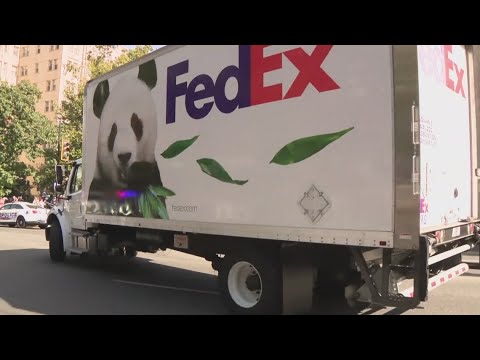
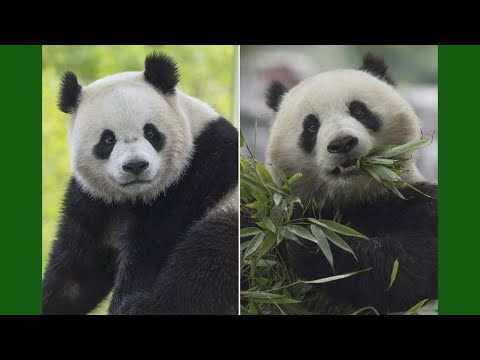
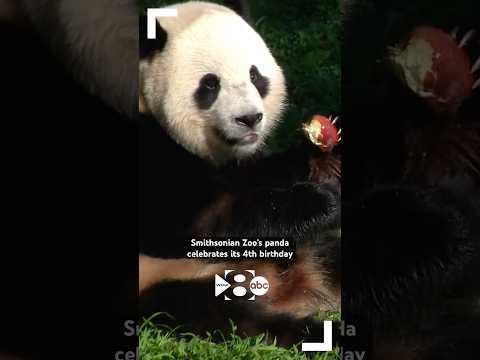
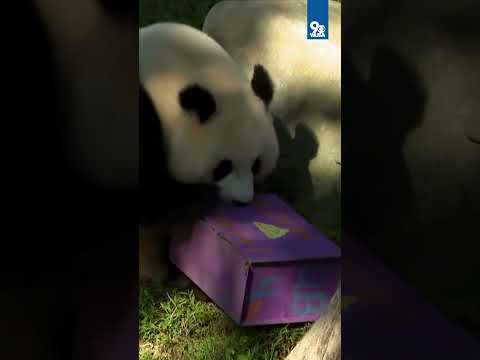
The three-year old giant pandas, named Bao Li and Qing Bao, were flown from China to Dulles International Airport in suburban Virginia, with a refueling stop in Alaska. They were loaded into special FedEx trucks and arrived at the zoo just before noon.
The zoo was closed on Tuesday to facilitate the arrivals. The bears will be quarantined from the public for at least 30 days. A statement from the zoo set the date for the bears' official public debut and the reopening of the renovated panada house as Jan. 24, 2025.
Bao Li (precious vigor) and Qing Bao (green treasure) arrive in Washington as part of a new 10-year agreement with Chinese authorities. The previous deal expired last year, leading to some concern among American panda-lovers that Beijing was gradually pulling its furry friendship ambassadors from American zoos amid rising diplomatic tensions.
Breeding pairs in zoos in Memphis and San Diego had already returned to China earlier and the four pandas in the Atlanta zoo left for China last week.
That anxiety turned to optimism last November when Chinese President Xi Jinping publicly wanted to continue the panda exchange programs. This year, a new pair of bears was delivered to the San Diego Zoo, while another pair was promised to be delivered to San Francisco.
In Washington, National Zoo officials remained conspicuously silent about negotiations for a new panda agreement, but they expressed optimism about striking a new deal and launched a multimillion-dollar renovation of its panda enclosure in anticipation. Then in late May, Smith teamed up with first lady Jill Biden to announce that Bao Li and Qing Bao would be arriving by the end of this year.
Pandas have become one of the unofficial symbols of the nation’s capital, dating back to 1972 when the first pair — Ling Ling and Hsing Hsing — were sent as a gift from Chinese Premier Zhou Enlai following President Richard Nixon’s historic diplomatic visit to China. Later, a rolling series of 10-year cooperation agreements was struck.
The exact terms of the deal are still unclear; under previous 10-year agreements, the Chinese government receives $1 million per year, per bear. Any cubs born in overseas zoos are typically returned to China before they reach age four.
Liu Pengyu, a spokesperson for the Chinese embassy in Washington, credited the decades of cooperation with advancing research into panda preservation and breeding. During the lifespan of these agreements, giant pandas have been reclassified from an endangered species to merely vulnerable.
“The current round of cooperation will focus on prevention and treatment of major diseases, and protection of habitats and wild giant panda populations,” Liu said in an email. “We hope the arrival of the pandas will inject fresh impetus into exchanges between China and the U.S., and help to stabilize the broader bilateral relationship as well.”