> Battery plants become major sticking point in UAW strike against Detroit automakers
Battery plants become major sticking point in UAW strike against Detroit automakers
Clip ID 2274693
Clearance
Add to
Share
Add to Review Link
By Request
By Request assets are not available for immediate purchase.
This content has not been pre-checked for copyright.
Per clip rates are for 20 seconds of final usage. If you are using more then 20 seconds or need a different file format or have questions about clearances contact us
Description
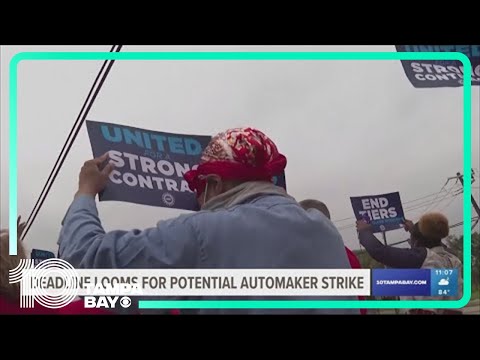
On the picket lines at a Ford factory west of Detroit, many striking workers don't think the electric vehicle revolution will take hold, at least not in the near future.
But just in case, they're backing United Auto Workers President Shawn Fain's quest to represent workers at EV battery factories and win the same hourly pay and benefits as they get at the Ford plant.
The 10 U.S. battery cell plants proposed by General Motors, Ford, and Jeep maker Stellantis, mostly joint ventures with South Korean companies, have become a major sticking point in the 3-week-old strike by the union against Detroit automakers.
Simply put: if electric vehicles replace those that run on gasoline, most UAW workers at engine and transmission plants will lose their jobs. If the battery plants aren't union and pay less, workers won't have anywhere to go to get the same wages and benefits. So, the future of the union is at stake.
The companies, however, don’t want to pay the top union wages, fearing that will increase their cost gap over Tesla and other competitors with nonunion battery plants mainly in the U.S. South. That could make Detroit’s EVs more expensive and harder to sell.
The issue, festering for months behind pay and cost-of-living increases, tiers of worker pay, restoration of retirement benefits and even a 32-hour work week, blew up last week when Ford CEO Jim Farley accused the union of using it to hold a potential deal hostage.
On the picket line at the Ford plant in Wayne, Michigan, where Bronco SUVs and Ranger pickups are made, workers questioned whether people would buy EVs because they can't travel far and not that many charging stations are available yet.
But they also see a future where people could switch and say wages at the battery plants should match what they make.
“We’re making a certain amount of money. Why are they going to be making less? Why are they not going to be union? It's deliberately to help the company,” said Chris Jedrzejek (JED’-reh-jek), who has worked at Ford for 23 years.
The union may end up winning pay hikes at existing factories. But some experts say it’ll be problematic if the UAW doesn’t make gains at plants that are crucial to the future of the industry.