Description
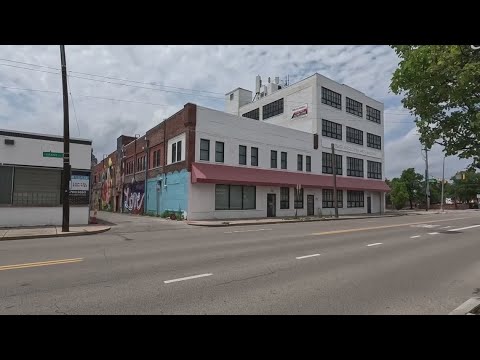
At the beginning of 2024, Columbus Code Enforcement counted nearly 3,000 vacant properties across the city. And more than 500 of them were in the Hilltop alone.
So, what's the solution?
https://www.10tv.com/article/news/investigations/10-investigates/columbus-hilltop-vacant-properties-response/530-1cf60c8f-98de-4c56-bac0-1741a92ff26b
Terry Roofe said that if people complain enough, the city will kick the problem property up to the Franklin County Environmental Court. But he added that it isn't a quick fix.
"The process can drag on for years," he said.
10 Investigates first brought the concern to Mayor Andrew Ginther in November of 2024.
"Is there a way to speed up that process to both give owners a chance to fix what's wrong but also hold them accountable in a way that's a bit faster?" 10 Investigates Reporter Rochelle Alleyne asked.
"We'd be all for it, but we have to follow the law and follow that process," the mayor responded.
10 Investigates then took that concern directly to the person who created the law in 1991. Former state representative Michael Stinziano said the court system was overwhelmed with these kinds of cases even back then.
"It became clear that there needed to be a special court dedicated to hearing. Housing issues and that's what the environmental court ultimately became," he said.
And as time has gone on, the caseload has only grown.
Judge Stephanie Mingo oversees the environmental court. She said the time between a case being filed and the homeowner facing fines, is, at minimum, five to six months. The reason is because of all the hearings and procedures that come in between.
"It's frustrating for the court. I know it's frustrating for the community," she said.
However, Mingo said the biggest slowdown in that process starts with making sure everyone connected to the case knows about it.
"The influx of out-of-state investors certainly has an impact on this court," said Mingo. "Sometimes during the life of a case, we will [also] see a property change hands three or four times. And each time that happens, this court is required to ensure that that new owner or the new interested party is afforded due process and then it sort of starts all over again."
And the hurdles don't end there. The environmental court often sees repeat offenders.
"We do see repeat offenders. Mostly, those are repeat offenders [who] are owners of large amounts of property throughout Franklin County," Mingo said.
To fix those issue of repeat offenders there'd need to be a change at the state level. So, 10 Investigates spoke to the three state lawmakers representing the Hilltop.
State Sen. Bill DeMora (D-Columbus) said he hopes to tighten regulations.
"You can't have a P.O. box. You have to have a name and an address and contact information instead of having an LLC that's owned by another shell corporation...," he said.
DeMora added that it makes it more difficult to track down property owners. If people can't track down the owners, then there's nothing left that can be done.
According to state Rep. Dontavius Jarrells (D-Columbs), this kind of legislation was attempted before.
The Neighborhood Protection Act was first proposed three years ago. It would have required auditors in the state's largest counties to maintain a vacant home registry and fine property owners who don't update their contact information up to $1200.
That bill failed in an Ohio House committee weeks later.
Rep. Jarrells supported the bill the first time and said the state senator behind the first push is looking to introduce it again.
"Is that something you would be supporting on the house side of things if it moves forward?" asked 10 Investigates Reporter Rochelle Alleyne.
"Absolutely. I think it's an amazing bill," said Rep. Jarrells, "Having this registry would allow us to have the right person to contact at the right time when it was necessary."
But even under the best circumstances, it's progress that lawmakers acknowledge won't come overnight.
In the meantime, state Rep. Christine Cockley said she plans to work as a liaison to keep the process as transparent as possible.
"I want to make sure that residents are getting updates on where these properties stand," she said.
It's work that Roofe said he hopes doesn't amount to broken promises.
"Start cracking down harder on these people," he said.
10 Investigates also confirmed that the City of Columbus is moving forward with its own vacant and foreclosure registry.
Anthony Celebrezze III, the deputy director of the Columbus Department of Building and Zoning, said the legislation to move the registry-building process forward went into effect on Jan. 1.
He said the department is looking to use specialized software to manage the registries. With Columbus City Council passing the budget, the department will begin researching which product it plans to use.