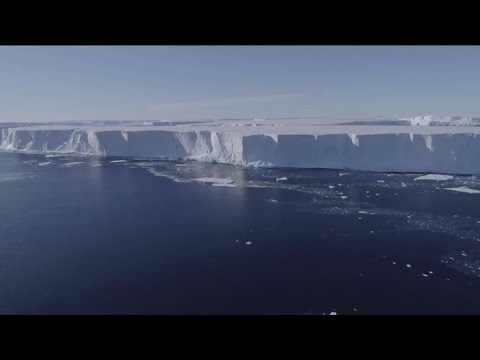
> Scientists sound alarm on global consequences as Antarctic ice melt accelerates
Scientists sound alarm on global consequences as Antarctic ice melt accelerates
Clip ID 2286050
Clearance
Add to
Share
Add to Review Link
By Request
By Request assets are not available for immediate purchase.
This content has not been pre-checked for copyright.
Per clip rates are for 20 seconds of final usage. If you are using more then 20 seconds or need a different file format or have questions about clearances contact us
Description
Scientists are sounding the alarm about the global consequences of the rapid acceleration of the Antarctic ice melt.
Human-caused climate change from the burning of fossil fuels is melting ice that has been frozen for millions of years in Antarctica.
The rate of melting is over three times faster than in the early 1990s, according to the United Nations.
The frozen continent plays a significant role in regulating Earth’s climate because it reflects sunlight away and drives major ocean currents.
Experts caution about the cascading consequences globally, from sea level rise to higher temperatures and changes in ocean currents.
César Cárdenas, researcher at the Chilean Antarctic Institute (INACH), says “what happens in Antarctica does not stay only in Antarctica.”
“Today we know the importance of the melting of ice shelves, for example, and how this will affect sea level” rise all over the world.
For years, scientists and environmentalists have kept an eye on the West Antarctic Ice Sheet as an important indicator of global warming.
A study published in Nature Climate Change in October said warming has increased to the point that the ice sheet will now experience “unavoidable” melting regardless of how much the world reduces emissions of planet-warming gases like carbon dioxide.
The study’s lead author, Kaitlin Naughten, estimated that melting ice in Antarctica’s most at-risk areas could raise global sea levels by about 1.8 meters (5.9 feet) over the next few centuries.
The loss of Antarctic ice is also hurting the survival of several species, like the emperor penguins.
Cárdenas said that “many changes that were projected (for the future) are already happening,” hurting species like the emperor penguins, who need sea ice for their breeding season.
Other species in Antarctica are proving to be more adaptable to climate change, like the gentoo penguin.
U.N. Secretary-General Antonio Guterres visited Antarctica in late November, right before the start of the international climate talks in Dubai.
Guterres said intense action must be taken at the conference, where countries are addressing their commitments to lowering emissions of planet-warming gases.