> Misinformation fills internet after Trump assassination attempt. Here are the facts
Misinformation fills internet after Trump assassination attempt. Here are the facts
Clip ID 2291108
Clearance
Add to
Share
Add to Review Link
By Request
By Request assets are not available for immediate purchase.
This content has not been pre-checked for copyright.
Per clip rates are for 20 seconds of final usage. If you are using more then 20 seconds or need a different file format or have questions about clearances contact us
Description
Within minutes of the gunfire, the attempted assassination of former President Donald Trump spawned a vast sea of claims — some outlandish, others contradictory — reflecting the frightening uncertainties of the moment as well as America's fevered, polarized political climate.
The cloudburst of speculation and conjecture as Americans turned to the internet for news about the shooting is the latest sign of how social media has emerged as a dominant source of information — and misinformation — for many, and a contributor to the distrust and turbulence now driving American politics.
""It hasn't even been 24 hours since the attempt on former President Trump's lif, yet already a flurry of conspiracy theories, misleading claims and debunked allegations are filling the internet as people go online to make sense of the event," said AP reporter David Klepper.
Mentions of Trump on social media soared up to 17 times the average daily amount in the hours after the shooting, according to PeakMetrics, a cyber firm that tracks online narratives.
Many of those mentions were expressions of sympathy for Trump or calls for unity. But many others made unfounded, fantastical claims.
Here's a look at the claims that surfaced online following the shooting:
Many of the more specious claims that surfaced immediately after the shooting sought to blame Trump or his Democratic opponent, President Joe Biden, for the attack.
Some voices on the left quickly proclaimed the shooting to be a false flag concocted by Trump, while some Trump supporters suggested the Secret Service intentionally failed to protect Trump on the White House’s orders.
"There's no evidence for either of these conspiracy theories, but they reflect the kind of claims that are spreading in this very polarized emotional climate in the immediate aftermath of the assassination attempt," said Klepper.
The Secret Service on Sunday pushed back on claims circulating on social media that Trump's campaign had asked for greater security before Saturday's rally and was told no.
Videos of the shooting were quickly dissected in partisan echo chambers and Trump supporters and detractors looked for evidence to support their beliefs.
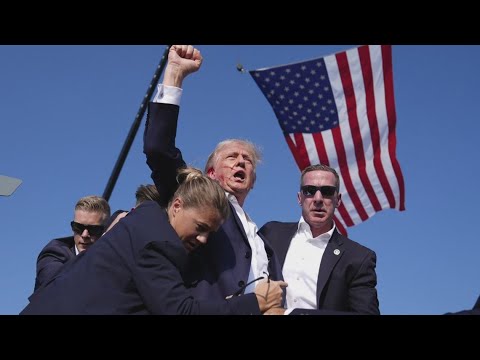
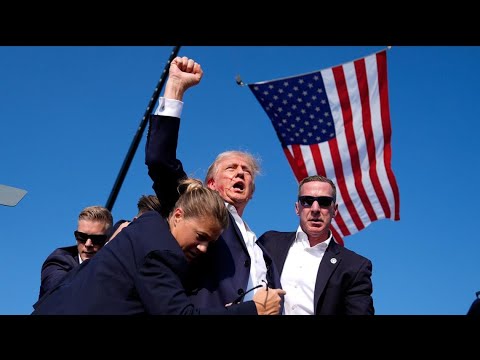
Videos showing Secret Service agents moving audience members away from Trump before the shooting were offered as evidence that it was an inside job. Images of Trump's defiantly raised fist were used to make the opposite claim — that the whole event was staged by Trump.
Social media bots helped amplify the false claims on platforms including Facebook, Instagram, X and TikTok, according to an analysis by the Israeli tech firm Cyabra, which found that a full 45% of the accounts using hashtags like #fakeassassination and #stagedshooting were inauthentic.
An image created using artificial intelligence — depicting a smiling Trump moments after the shooting — was also making the rounds, Cyabra found.
Moments like this are ‘cannon fodder’ for extremists.
Conspiracy theories quickly emerged online that misidentified the suspected shooter, blamed other people without evidence and espoused hate speech, including virulent antisemitism.
Before authorities identified the suspect, photos of two different people circulated widely online falsely identifying them as the shooter.
In all the speculation and conjecture, others were trying to exploit the event financially. On X on Sunday morning, an account named Proud Patriots urged Trump supporters to purchase their assassination-attempt themed merchandise.