> When will the next pope be elected? What to know about the conclave
When will the next pope be elected? What to know about the conclave
Clip ID 2497152
Clearance
Add to
Share
Add to Review Link
By Request
By Request assets are not available for immediate purchase.
This content has not been pre-checked for copyright.
Per clip rates are for 20 seconds of final usage. If you are using more then 20 seconds or need a different file format or have questions about clearances contact us
Description
With the news that Pope Francis has died, many are likely wondering how and who gets to choose the next head of the Catholic Church.
Francis, born Jorge Mario Bergoglio, has been at the helm of the Catholic Church for the last 12 years. The Argentinian-born Francis was the first pope born or raised outside of Europe in over 1,000 years.
The Vatican announced his death early Monday morning.
Like his predecessors, Francis was selected using an age-old method — a system known as the Papal conclave. Interest in papal elections also surged earlier this year thanks to the Oscar-nominated film “Conclave.”
What is a conclave?
Following a pope's death or resignation, the College of Cardinals meets to select the new pope. The event is called the "conclave," which in Latin translates to "with Key."
The conclave has remained virtually unchanged for the last 800 years and typically begins 15 to 20 days after the pope's death or resignation.
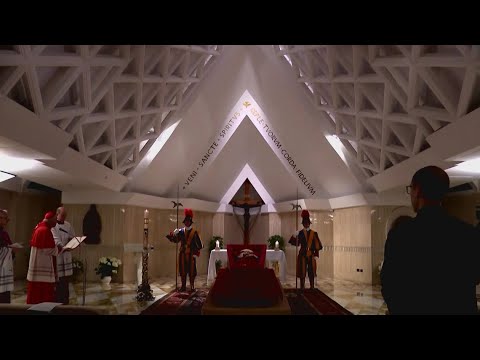
To kick off the process, the cardinals will gather for a special morning mass at the Vatican, invoking "the guidance of the Holy Spirit in electing the new pope," according to the United States Conference of Catholic Bishops.
Following the mass, the cardinals then proceed to the Sistine Chapel and take an oath of secrecy before the doors are shut. The Sistine Chapel has been used for the special meeting since 1858.
The cardinals vote by secret ballot and the pope's successor must receive two-thirds of the vote to be elected. Each cardinal will write down their vote on a ballot, that is then twice folded before it is placed in a large chalice. The results of each round are counted aloud and if it does not yield the two-third majority, then the ballots are burned in a special stove along with a mixture of chemicals to produce black smoke -- signaling that a pope has yet to be chosen.
Four rounds of balloting are taken each day, except on the first day, until a candidate is selected. There are traditionally two rounds in the morning and two in the afternoon.
If no one is elected after three days, voting pauses for up to one day. Voting resumes and if no pope is elected after another seven ballots, there is another pause, and so on until about 12 days of balloting have passed.
Under norms introduced by Benedict XVI just before he resigned, the cardinals then go to a runoff of the top two vote-getters. A two-thirds majority is required; neither of the two top candidates casts a ballot in the runoff.